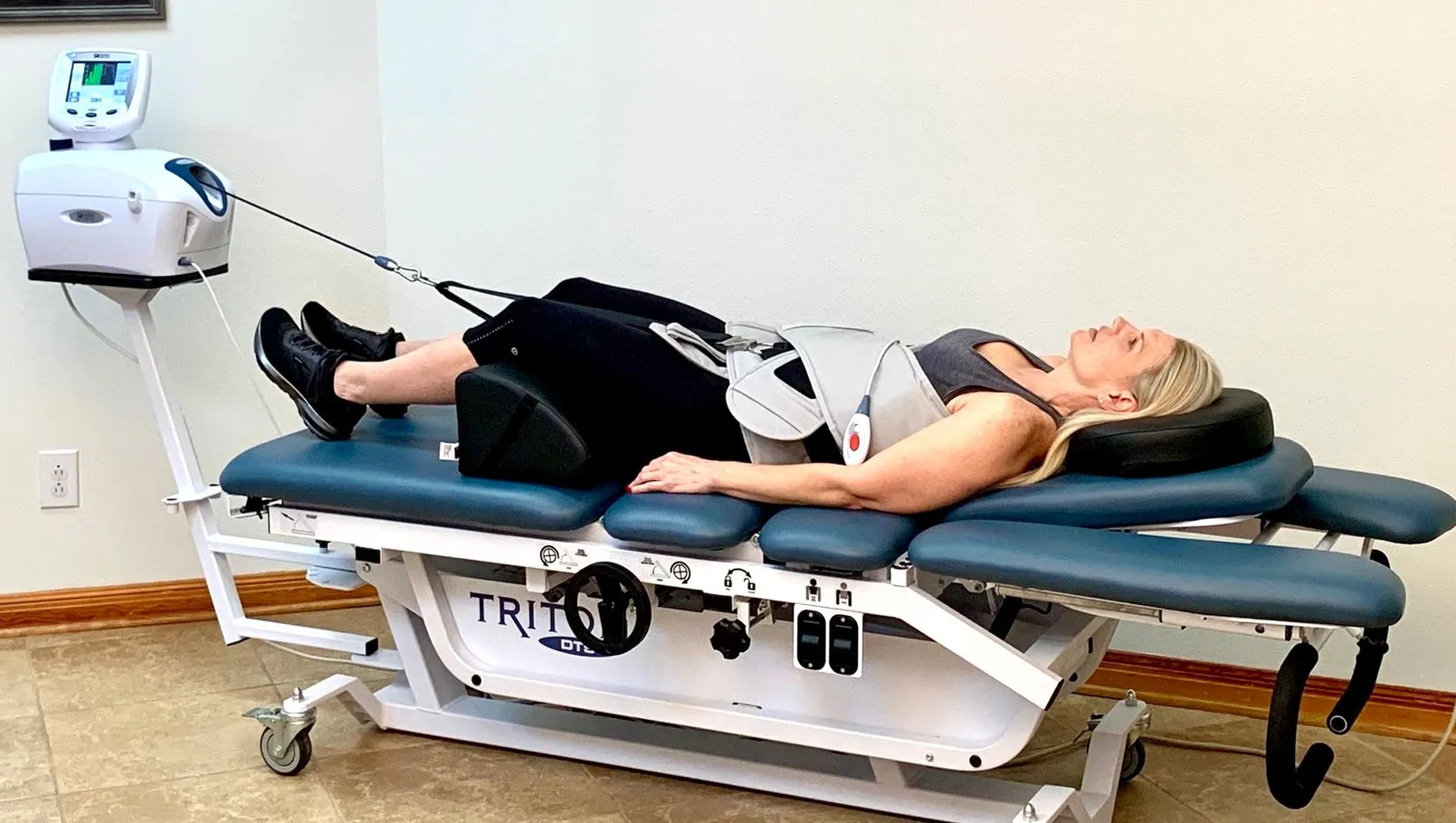
A non-surgical option for disc conditions:
Between each vertebra in your spine is a spinal disc, which is a soft, cushion-like structure that acts as a shock absorber and helps your spine move smoothly. Low back pain is one of the most common health complaints worldwide, and disc problems are a leading cause.
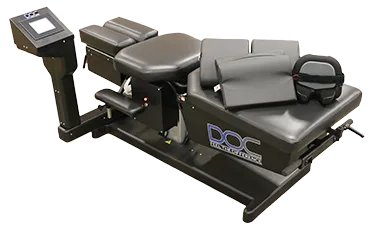
At APH Chiropractic, we have one of the most sophisticated non-surgical treatments available for disc injuries: Spinal Disc Decompression. We are one of the few offices in the state of Missouri to offer both cervical and lumbar options for our patients with spinal disc disorders. Spinal disc decompression is a safe, gentle, non-surgical, and effective modality to heal lumbar and cervical disc conditions. Our doctors have seen these treatments saved a countless number of patients from surgery. If surgery has already been presented as one of your options for a spinal condition, you might be a candidate for trying decompression first. Spinal disc decompression works by taking pressure off the spinal discs, restoring the normal physiological hydration process across the disc space, and minimizing pressure/inflammation on the spinal nerves.
Common Types of Disc Injuries
- Disc Bulge
- The outer wall of the disc weakens or stretches, and the disc extends beyond its normal boundary.
- Often caused by poor posture, repetitive strain, or age-related wear.
- May or may not press on nearby nerves.
- Disc Herniation (Slipped or Ruptured Disc)
- The inner gel-like material pushes through a tear in the outer layer.
- Can put pressure on nearby spinal nerves, leading to pain, tingling, or numbness down the arms or legs (such as sciatica).
- Disc Degeneration (Degenerative Disc Disease)
- Over time, discs lose hydration and height, becoming thinner and less flexible.
- This is a normal part of aging but can contribute to chronic stiffness and back pain.
- Disc Tear (Annular Tear)
- Small cracks form in the tough outer layer of the disc.
Conditions That Spinal Decompression Can Help
- Herniated or Bulging Discs Spinal decompression relieves pressure on discs and nerves, helping reduce pain, numbness, and tingling caused by herniations.
- Degenerative Disc Disease Decompression can improve disc hydration and spacing, reducing chronic low back pain from age-related disc wear.
- Sciatica (Lumbar Radiculopathy) By taking pressure off the sciatic nerve, decompression can help relieve shooting pain, tingling, and weakness down the leg.
- Spinal Stenosis Decompression creates more space in the spinal canal, reducing nerve irritation that causes leg pain, numbness, or difficulty walking.
- Facet Joint Syndrome Decompression helps reduce joint stress and irritation in the small stabilizing joints of the spine.
- Posterior Facet Hypertrophy or Arthrosis Can help relieve stiffness and compression from enlarged or arthritic spinal joints.
- Chronic Low Back Pain Decompression can reduce tension and improve spinal alignment, helping manage long-term pain related to mechanical or disc problems.
- Neck Pain from Cervical Disc Issues Gentle cervical decompression can relieve pressure from herniated or degenerated discs in the neck, improving movement and reducing radiating arm pain.
- Nerve Root Compression By increasing disc height and reducing inflammation, decompression therapy can help nerves function more normally.
- Failed Back Surgery Syndrome (Post-Surgical Pain) Some patients experience symptom relief with decompression even after previous spinal surgery.
Symptoms Caused by Disc Injuries
- Localized Pain
Pain in the area of the injured disc — usually in the lower back or neck — that may feel sharp, dull, or aching. - Radiating Pain
Pain that travels along a nerve pathway.- In the lower back, it can radiate down the buttocks, legs, or feet (often called sciatica).
- In the neck, it can radiate into the shoulders, arms, or hands.
- Numbness or Tingling
A “pins and needles” sensation in the arms, hands, legs, or feet if a spinal nerve is compressed. - Muscle Weakness
Nerve pressure can affect muscle strength, making it harder to lift objects, grip, or walk normally. - Pain That Worsens With Movement
Activities such as bending, lifting, coughing, or sitting for long periods often increase discomfort. - Reduced Flexibility or Stiffness
Limited range of motion in the back or neck, often due to pain or muscle guarding.